
The obnoxious railings of a hireling in a Youtube video prompted me to study the English word “church” and how it came to be the de facto translation for the Greek word “ekklesia“. It’s a question I’ve pondered for years if only because the New Testament was written 1,400 years before the word “church” came to be. That and my own observations of the way language has evolved over the course of my lifetime. Turns out the Greek word “Ekklesia” refers to the people whom Christ has called out of the world unto Himself whereas the English word “church” refers to the building where the people meet. Where it piques my curiosity has to do with translation, the essence of which is to match words from one language to another to faithfully and accurately convey the meaning of the original text. That the original Greek word differs in meaning from the English word strikes me as an error in translation.
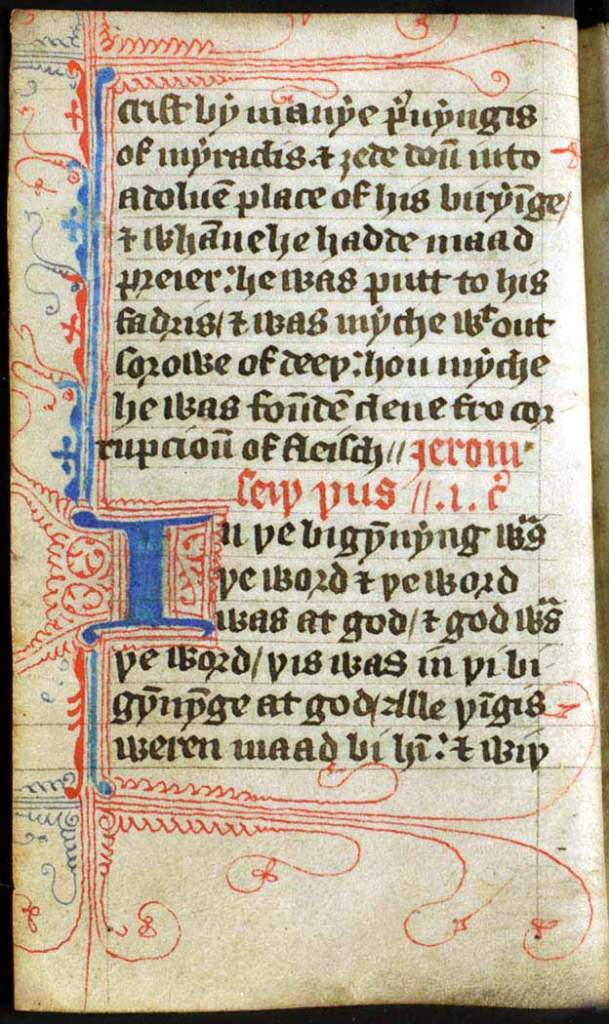
If you didn’t know, the oldest most reliable transcripts of the New Testament are written in Greek. The oldest fragment is known as Papyrus 52 and dates to 125-175 AD. The oldest complete codex (book form) of the New Testament is known as Codex Sinaiticus which dates to 330–360 AD. Not until 1382 AD was there a Bible in English, translated by John Wycliffe from the Latin Vulgate Bible. The first English New Testament translation sourced directly from Greek manuscripts dates to 1525 AD, thereby, averting the Roman Catholic influence and control inherent in the Latin Vulgate Bible. William Tyndale, the first person to translate the Bible from Greek to English, was very particular about how he translated the word “ekklesia.” He consistently translated this word as “congregation.”
The word “church” (1500s) was still evolving when the Wycliffe Bible was published in 1382. For more about that, Etymonline.com attributes church to the merging and evolution of the old English word chirche and the German word kirche which refer to “the Lord’s house.” Comparatively, the meaning of the Greek word ekklesia has been stable over the 2000 years that the English language has been evolving since Christ. Ekklesia has always retained the emphasis on people – specifically – a gathering of people (congregation).
As for my own meager study efforts, the word “ekklesia” appears 116 times in the New Testament. Only 3 of 116 uses of “ekklesia” came from the mouth of Jesus- once in Matthew 16:18 and twice in Matthew 18:17. The remaining 113 uses of “ekklesia” are in Acts through Revelation which were written by the apostles. Frankly, I believe it is an error to put the word “church” into Jesus mouth for reasons outlined below.
Continue reading
