
The site owner and author, Jack Helser, grants permission to save, print and reproduce this article and download the MP3 files (click the 3 vertical dots) and PDF Transcripts (click the download buttons) for use in discussion groups and individual study.
To Tithe or NOT to Tithe: The $earch for Truth, Part 1
The ministers of the old-timey Presbyterian church I grew up in never preached about tithing that I recall. Rather, “stewardship” as it was called then, was a brief appeal before taking up the collection. It was around my 4th grade year when I asked mom to let me stay for the entire adult service rather than send me off to children’s church after the welcome and announcements. There I remember the minister, wearing a black robe and colorful advent stole, walking from the pulpit to the altar where he motioned for the ushers to come forward saying “It’s time to bring God our TIDES and offerings.”

“What does God want with TIDES”, I asked myself. No doubt a factor in my confusion was the beach vacation my family just returned from, where we dug our daily limit of razor clams at low tide. I couldn’t tell you how long it was before I figured out the minister was saying “tithes” not “tides”.
The first time I heard someone preach about the tithe was in 1979. Oddly enough, it wasn’t in church that I heard it preached. Just 23 at the time, I was working the grave yard shift in support of a computer operation where the lone terminal operator listened to cassette tapes of word-of-faith preachers such as R. W. Schambach, Kenneth Copeland, Jesse Duplantis, Joyce Meyer, Paul Crouch and others. Dignified and intellectual Presbyterian that I was, I’d never heard that kind of preaching before, the shouting and haughty dramatics. I was sickened by it at first but because their message was delivered with such fervor and seeming unanimity together with citations of scripture I came to accept it as truth along with a heapin’ helpin’ of guilt and condemnation because I didn’t tithe. In fact, I couldn’t tithe because mine was a single income family, living paycheck to paycheck.
With little money to give, I instead devoted my musical gift to the Lord and gave free concerts, donating the love offerings to the food bank or returned them to the host church for the poor in the congregation. I gave away my albums and often played guitar in the church praise band. But still, the feelings of guilt and condemnation vexed me because I was “robbing God”.
Fast forward 30 years from the day I first heard the word “TIDES”, my wife and I relocated to the rural Midwest for a season of growth. There we met the “spitfire trio” whom I introduced in the episode “In memory of Betsy”. One Sunday afternoon after returning from church the phone rang and one of the spitfire trio told me about the preacher whose congregation quietly snuck out of church during the prayer following a long sermon on tithing. He said “Amen”, looked up and cried out “half my church is gone!” Oh how I laughed saying “they must have fled the conviction of the Holy Spirit”.
What the Lord said took me completely by surprise: “They fled from error and guilt-based giving”. “What?” I cried. I’d heard more sermons on the tithe than any other topic except our need of Jesus for salvation! After I picked up my jaw from the floor the Lord prompted me to study tithing and giving.
Throughout this Bible study I prayed for His guidance and in the end reached the inescapable conclusion that the “tithe” is to the church today what the issue of “circumcision” was to the church in Paul’s time.
The verse most often cited in support of the tithe is from the Old Testament, found in Malachi 3:8-10:
8. “”Will a man rob God? Yet you rob me. “But you ask, `How do we rob you?’ “In tithes and offerings. 9. You are under a curse–the whole nation of you–because you are robbing me. 10. Bring the whole tithe into the storehouse, that there may be food in my house. Test me in this,” says the LORD Almighty, “and see if I will not throw open the floodgates of heaven and pour out so much blessing that you will not have room enough for it.
Many preachers shorten Malachi 3:8-10 to simply “Bring the whole tithe into the storehouse” with the inference that their church is the “storehouse”. As a basis for the Lord’s teaching, He had me concentrate on the passage: “Bring the whole tithe into the storehouse, that there may be food in my house”.
From there He asked me three questions:
1) What is the tithe? It’s 10% of the increase established in Leviticus 27:30-33 as an offering Holy to the Lord. The scripture clearly identifies the tithe as grain and fruit, herd and flock. The tithe is food!
2) What was the tithe for? God established the tithe to feed the Levite priests (and their families) who worked in the temple day and night ( 1 Chronicles 9:33 ). Without it, the Levites would have needed to raise their own food, thereby taking them away from ministering to God. Hence the reference in Malachi 3:10 “…that there may be food in my house”. Nehemiah 13:10-13 records a time when the Levite priests were not receiving the tithe wherein they abandoned their temple responsibilities to work the farms to feed their families. Thus the reference to ‘robbing God’ in Malachi 3:8 is in fact robbing God of ministry by failing to take care of God’s priests through the tithe of food items.
3) What is the storehouse? 2 Chronicles 31 teaches that the storehouse is specially prepared rooms in the Temple in Jerusalem. At a time when there was so much grain from the tithe it was heaped up in the streets, King Hezekiah gave orders to prepare storerooms in the temple.
Having established the original purpose of the tithe, the Lord asked me several more questions.
Q: “What happened to the temple (storehouse)?”
A: It was destroyed in 70AD and has not been rebuilt.
Q: “Why?”
A: The old covenant system of animal sacrifice to atone for sin has been replaced by the new covenant in Christ’s blood.
Q: “Where is the temple now?”
A: 1 Corinthians 3:16 and 6:19 says WE are now the temple of God. No longer does God abide in man made temples (Acts 7:48, Acts 17:24), but in the hearts of his children through the Holy Spirit.
Q: “What happened to the Levite priests?”
A: The Levite priesthood was rendered obsolete when the old covenant system was superseded by the covenant of Christ’s blood and worship that is now in Spirit and in Truth.
Q: “Who is the priesthood now?”
A: 1 Peter 2:5 and 9, and Revelation 1:6 says those who have received Jesus are the new priesthood.
And that dear friends, bring us to the million dollar question: what should be done with the tithe after the temple storehouse was destroyed and the Levite priesthood to whom God gave the tithe was rendered obsolete by the priesthood in Christ.
To Tithe or NOT to Tithe: The $earch for Truth, Part 2
In this episode, we’ll begin to look at the ways it’s been taught and implemented in the Church.
Saddling the Body of Christ with the Tithe requires numerous twists and reinterpretations of scripture.

1) The tithe must be imported from the OT law of Moses to the new covenant of grace by Christ’s blood.
2) The tithe must be redefined from “flocks, herds, fruit and grain” to “money”.
3) Bringers of the tithe must be redefined from “farmers” (or food growers) to “wage earners”.
4) The storehouse must be redefined from the temple in Jerusalem to the local church building.
5) Believers must deny they are the “house of God” and accept the lie that the church building is the “house of God”.
6) Believers must accept the clergy as the new priesthood, thereby replacing the Levite priesthood to whom God gave the tithe.
7) Believers must deny their own priesthood and accept the lie that they are the “laity”.
The tithe has been introduced to the Body of Christ using 2 detestable tactics of the enemy.
1) Sowing guilt and shame into the Body of Christ. This is done by quoting Malachi 3:8 and accusing believers of robbing God. The net effect has been to extort money from believers, thereby robbing them of the joy and blessing of giving as God leads. The practice ignores Paul’s instructions to the church at Corinth: “Each man should give what he has decided in his heart to give” ( 2 Corinthians 9:7 ). Also, it contradicts Paul’s word in Romans 8:1: “There is now NO condemnation for those who are in Christ”.
2) Another of the enemy’s tactics is to blame believers for their financial troubles by telling them they are not blessed because they do not tithe. Often Malachi 3:10 is emphasized “Test me in this, says the LORD Almighty, and see if I will not throw open the floodgates of heaven and pour out so much blessing that you will not have room enough for it.” In so doing, believers are challenged to tithe with the promise that God will bless them if they do. Such giving is not out of love for God but out of selfishness. It also contradicts Matthew 4:7 “Do not put the Lord your God to the test”.
Whether sowing guilt and shame or blaming believers for their own hardships, we would do well to remember that it is Satan who is the accuser of the brethren (Revelation 12:10).
But let’s suppose for the sake of argument that Jesus wanted us to continue tithing. It would be appropriate then to use the tithe to feed the priesthood as originally purposed. Who then is the priesthood? The New Testament plainly teaches that every believer is a priest in Christ! Likewise, the New Testament declares that believers are the temple of God now. Man’s church on the other hand has drawn on the Old Testament model of temple services and the Levitical Priesthood to establish a new temple and priesthood – the church building is commonly called “the house of God” and the ordained clergy is the priesthood. Believers are commonly called “the laity”. This division between clergy and “laity” is not Biblical. In fact, I believe it to be the doctrine of the Nicolaitan’s that Jesus hates (Revelation 2:6). The root of the word “Nicolaitan’s” is Nikolaos which means “victorious over the people”.
To be clear, Jesus did not establish the ordained clergy – He chose fishermen and tax collectors to preach His gospel. Neither did He establish division in His church, He desires unity ( John 17:20-23 ). The apostles didn’t set up an ordained clergy – they chose men full of the Holy Spirit and wisdom to serve the Body ( Acts 6:3, 1 Timothy 3 ). Rather, this man-made division between “clergy” and “laity” has served to divert the offerings of the Body of Christ away from the people it is intended to bless where it is used in ways contrary to the purposes of God. The net result has been starvation and financial bondage for many believers and the real priesthood – the whole Body of Christ – has not been prepared to carry out Christ’s command to take the gospel message to all nations!
Jesus is the Word of God in the flesh ( John 1:14 ). He knew Malachi 3:10 says “bring the whole tithe into the storehouse” when He instructed the rich man to sell everything and give the proceeds to the poor ( Matthew 19:21 ). I can imagine the Scribes and Pharisees choked back outrage over what Jesus said as they were in the habit of devouring widow’s houses for profit ( Luke 20:47 ) and the rich man’s possessions would have been a real feast for them. In Matthew 25:31-46 concerning the judgment of the nations, Jesus reiterated His desire to help the needy within the body of Christ wherein at judgment Jesus rewards those who feed the hungry and clothe the poor. Since He judges the nations for their compassionate care of the poor and hungry and since He commands us to take the gospel message to the whole world, why is most of our giving used for church buildings and salaries with only a pittance devoted to the poor, missions and evangelism?
Is the church making goats out of us by not feeding the hungry and clothing the poor in the body of Christ with our offerings?
I’d like to suggest that we not wait until the Judgment of Christ to find out!
On many occasions, the Spirit prompted me to take what I would normally put in the offering plate and give directly to someone in need. I love giving like that! But, absent specific giving instructions I never questioned the common practice of giving to the church where I trusted them to administer my gifts. That is, until the day the Lord had me witness an abomination that left me nauseous.
In the main office of the church I attended, I was fixing a computer one Friday morning. Two young black women, with 3 adorable children dressed in their Sunday best, came into the office to ask for a food donation. The 3 secretaries of our all white middle class church stared at them and finally one said nervously “our deacon of benevolence is in the office on Thursday afternoons – can I make an appointment for you next Thursday?” One of the women pleaded “We can’t wait a week, we need food now”. The secretary repeated her offer and I became sick to my stomach. I left quickly and drove a mile up the road to a cash machine and came directly back to the church only to find that the 2 women and 3 children had left empty handed. The staff did not know where they had gone and I returned to my car and wept. I felt as if I had failed but the Lord said “you did not fail son, the church failed”.
Since that first eye-opening experience, the Lord has shown me many more sins of the church against the poor that leave me deeply grieved. One church considered installing an air conditioning system for which members quickly pledged $35,000 while a long-time member of the church who was wheelchair bound from advanced multiple sclerosis didn’t have enough money for food at the end of the month with what little state aid she received. Often she was forced to chose between food, medicine or heat in winter. For many months my wife and I gave to her anonymously and when she went to be with the Lord the following winter, she was at peace – the kind of peace that only acts of love can bring ( 1 John 3:18, James 1:22 ). As she was relieved of her financial stress, she blessed everyone around her with unquenchable joy. More important, she taught us about right giving.
Sadly, our sweet departed friend is not the first to be neglected in our responsibility to care for the needy in the Body. Consider the poor widow whom Jesus esteemed (Mark 12:41-44). She put 2 small coins, all that she had to live on, into the temple treasury. What is not obvious in that brief passage, the Law of Moses (Deuteronomy 10:18, 14:29, 24:19-21) provides for the care of widows. Elsewhere, Jesus rebuked the teachers of the law for “devouring widows’ houses” and declared they would be severely punished (Mark 12:40). While fondly remembered by Jesus for her selfless sacrifice, the same passage records the exploitative and abusive power of religious rulers over the widow.
The early church had such a better understanding of Christ’s intent to care for the needs of the Body of Christ than we do today. The proof of their caring for each other can be seen in Acts 2:44-47 and Acts 4:32-37 where the Body of Christ shared everything, and through their selfless giving, they eliminated poverty and indebtedness. In fact, Acts 4:34 says “there were no needy persons among them!” Taking up offerings to feed the Body of Christ was common in the early church. In Acts 11:27-30, the Gentile church at Antioch took up an offering for the believers in Judea who were experiencing a time of famine. Can you imagine a church today taking up an offering to help a cross-town rival?
How did the church get so far off course?
With an eye toward the Great Commission, how many children of God fail to reach their potential as ministers of the Gospel because they lack provision? It is through our giving and sharing that we equip the Church for service, eliminate hunger and poverty, and realize the fullness of our freedom in Christ.
No longer can we afford to misuse our offerings for church buildings, parsonages, conference centers, multi-purpose buildings, air conditioning, padded pews, pipe organs, and the like, all of which will soon be forgotten, even burned up on the day of the Lord, while God’s children go hungry, poor and ill equipped to minister the Gospel. Instead, like Abel, we should give our best gifts to the true Church – the people – because we love God and we want to see God’s work accomplished on the earth.
On concluding this first part of my study on tithing, the Lord asked me one final question:
What building ever won a person to Christ?
Ask the Lord to show you what to give and to whom, and remember that His words “Feed my sheep” (John 21:17) go much deeper than a pastor’s sermon on a Sunday morning. His words are both spiritual and literal. Like it says in Matthew 25:31-46 “whatsoever you have done for the least of these my brothers, you have done it for me”.
Clearly, it’s what we do for each other that counts with the Lord.
To Tithe or NOT to Tithe: The $earch for Truth, Part 3
When I first published “To Tithe or not to Tithe: The $earch for Truth” in 2001, many readers wrote about the objections raised by their pastors and other believers when they shared the article and announced their intention to stop tithing. The next several episodes will address those objections.

The “Melchizedek” Argument ( Genesis 14:18-20 )
Then Melchizedek king of Salem brought out bread and wine—since he was priest of God Most High — and he blessed Abram and said: “Blessed be Abram by God Most High, Creator of heaven and earth, and blessed be God Most High, who has delivered your enemies into your hand.” Then Abram gave Melchizedek a tenth of everything. (Genesis 14:18-20 BSB)
Abraham gave a tenth to “Melchizedek” from the spoils of war following Abraham’s stunning victory over the King of Elam when he captured Abraham’s nephew Lot, his family, and plundered the wealth of Sodom and Gomorrah (Genesis 14:11-12). The pastor who took offense noted the parallels between “Melchizedek” King of ‘Salem (Genesis 14:18-20) and Jesus our High Priest who is likened unto “Melchizedek” in Hebrews 5-7.
A close read of Hebrews 7 reveals that the author is NOT writing a defense of the “tithe” though it is mentioned several times. Rather, he makes a case for Jesus as our eternal high priest by comparing Him to Melchizedek. To help the Hebrew people understand Jesus the author asks a rhetorical question: “if Melchizedek was great though he was just a man, how much greater then is Jesus who was raised from the dead and lives forever”. The author also discusses the end of the Levite priesthood and the effect Christ’s death has on the practice of the Law ( Hebrews 7:11-12 , Hebrews 7:18-19 ).
Abraham lived near the great trees of Mamre the Amorite ( Genesis 14:13 ) at Hebron ( Genesis 13:18 ), 15 miles south of Jerusalem. The Genesis account says Abraham pursued the King of Elam north “as far as Dan” ( Genesis 14:14 ) which is about 100 miles north of Jerusalem. When Abraham caught up to them at Dan, he divided his men and attacked during the night, chasing them 30 miles farther north (Genesis 14:15-16). In all, Abraham’s pursuit took him 145 miles north of his home in Hebron. On his return home, Melchizedek came out to meet Abraham in King’s Valley. Abraham’s home was still 15 miles to the south. Unless Abraham carried his household possessions with him to north of Dan and back which is a 290 mile round trip, Abraham gave to Melchizedek only out of the spoils – the plunder he carried back from his victory over the King of Elam. ( Hebrews 7:2, 7:4 ).
There are many considerations in the story of Abraham’s victory. A Bible map suggests the location for Sodom and Gomorrah ( Genesis 13:10 ) SE of the Dead Sea, about 50 miles from Abraham’s home SW of the Dead Sea. News was by word of mouth and took time for word of Lot’s capture to reach the ears of Abraham. Likewise, it took time for Abraham to assemble an army of 318 trained men from his household ( Genesis 14:14 ). All the while the King of Elam was moving swiftly north. It’s reasonable to assume the King of Elam retreated around the east side of the Dead sea, otherwise he’d have run head on into Abraham at Hebron on the west side of the Dead Sea and there met his fate.
If in pursuit Abraham turned south from Hebron and around the south end of the Dead Sea instead of directly north through Jerusalem, we’d need to add at least 80 miles to that 290 mile round trip figure.
My point in discussing the mileage and route of pursuit is that a small army of 318 men, in pursuit of a powerful army with a substantial ‘head start’, must travel light. I assume Abraham and his men pursued Lot’s captors carrying only swords and shields, minimal food and water. A ‘light infantry’ going off to war does NOT carry their household possessions with them, their silver and gold, nor did they drive their flocks and herds before them in pursuit of the King of Elam.
That Abraham’s home was still 15 miles south from where he met Melchizedek in King’s Valley, shows a clear distinction between giving a tenth out of the spoils of war and Abraham’s personal wealth which remained at Abraham’s household. Abraham did NOT tithe out of his personal wealth.
His one time voluntary thank offering to Melchizedek differs from what was established by the Law of Moses as the ongoing tithe for the Levite priesthood. This I believe is the reason many Bible translations render the Hebrew word “ma’aser” (Strong’s #4643) in Genesis 14:20 as a “tenth” and not a “tithe”.
Another point to consider is simply that Melchizedek did not ask Abraham for a tenth of the plunder. How then is it that ministers can read the account and demand a tenth when Melchizedek did not ask for a tenth? Let’s take a close look at what really happened there. Melchizedek came out to King’s Valley to GIVE TO Abraham, NOT receive from Abraham! Melchizedek brought bread and wine for Abraham, they ate together and Melchizedek pronounced a wonderful blessing over Abraham. That is the very picture of Jesus who said “I did not come to be served, but to serve, and to give my life as a ransom for many!” (Matthew 20:28) Abraham was so moved he voluntarily gave a tenth to Melchizedek.
So why is it I’ve never heard a minister address the greater meaning of this passage, by relating Melchizedek who served bread and wine to Abraham, to Jesus who offered his flesh and blood to save us from sin (John 6:33-63)? Wasn’t it bread and wine that Jesus served the disciples at the last supper (Luke 22:17-20)? Genesis 14:18-20 is of great prophetic significance – a portrait of the new covenant of grace that would be implemented by the last Melchizedek priest: Jesus. Why then is it so many ministers take that passage and turn it into a binding law on the freed sons of God, when clearly it’s a beautiful promise of our eternal reconciliation and communion with the Father through the flesh and blood sin offering of Christ? Symbolically, Melchizedek served communion to Abraham, 2000 years before Jesus.
In summary, the obvious errors in looking to Abraham’s tenth to Melchizedek as rationale to shackle the body of Christ with an ongoing tithe are:
1) Reinterprets the “spoils of war” or “plunder” ( Genesis 14:14-16 ) as “wages”.
2) Overlooks that Abraham’s “tenth” to Melchizedek was voluntary, NOT compulsory.
3) Assumes Abraham’s “tenth” was a continuing practice despite no evidence to suggest that it was.
4) Ignores that Melchizedek did not ask for a tenth.
5) Ignores that it is the descendants of Levi who collect the tithe ( see Hebrews 7:5 ).
6) Ignores Hebrews 9:9-10 which states that the old way of gifts, sacrifices and offerings applied only until the “time of the new order” (NIV).
To Tithe or NOT to Tithe: The $earch for Truth, Part 4
What follows are two more objections from hirelings who can’t seem to fathom the consequences of teaching the law, nor can be bothered with context.
The “God Changes Not” Objection
“Tell me, you who want to be under the law, are you not aware of what the law says?” ( Galatians 4:21 ).
An objection made the statement “God changes not”. While it is true God does not change, He has changed the covenants through which He reconciles us to Himself. Thus it is a poor argument to use on behalf of the tithe. If “God changes not” is valid reason to keep one part of the Law – the tithe – then it is valid reason to keep ALL of the law – at least, that’s the gist of Galatians 5:3 wherein Paul wrote “every man who accepts circumcision is obligated to keep the whole law”.
So let’s consider the uproarious implications of believers upholding the entirety of the Law of Moses! Burnt offerings and sacrifices on the altar of every church! “Come to our Sunday morning worship service and BBQ!” Every church with it’s own grain silo, wine press, pasture and barn for the livestock people will be bringing! We’ll need much bigger offering plates! Oh and the joys we’ll have practicing ceremonial cleanliness – women instructed to stay home from church 1 week per month ( Leviticus 12:2 ). Pastors inspecting rashes and teens staying home from church and school because of a zit outbreak ( Leviticus 13 )! Infectious skin diseases are a serious matter you know! Undertakers! Poor undertakers! Every time they touch a deceased person they are unclean for a week ( Numbers 19:16 )! If business is brisk, don’t expect to see the undertaker in church again! Yessiree Lord! We want to go back to the Law! Not!
The Receiving “A Living” From Preaching the Gospel Argument

A pastor wrote to challenge me with 1st Corinthians 9:14. I don’t know which version he was using, rather, his belief was that the scripture entitled him to earn a living for preaching the gospel. In fact, he expressed the hope of gathering 10 families to himself, where if each of them gave him 10%, he’d earn a full time living from preaching the gospel. Like many people today, he believed the phrase “earn a living” means to collect “a salary and paycheck.” What follows is my response:
“Pastor …”
Since you asked me to address 1st Corinthians 9:14, I offer my comments IN context of the whole chapter together with a culturally honest understanding of how the apostles lived.
vs. 4 the context is “food and drink”
vs. 7 the context is food and drink
vs. 9 the context is food
vs 10 the context is food (as in grain from the harvest)
vs 11 the context is food (from the seed and harvest)
vs 13 the context is the food (meat and grain, fruit and drink) offered on the altar
And so, in context, Paul is talking about food and drink – sustenance.
If Paul, who was imprisoned, beaten, stoned, and ultimately beheaded for the gospel sought nothing more for himself than food and drink, how is it that modern pastors expect to extract a full time salary for conducting services on a Sunday morning and Wednesday evening? Especially in light of 1 Corinthians 9:15 where Paul expresses pride that he did not use his “rights” to ‘compensation’. In verses 17-27 Paul makes clear that he wants to offer the gospel completely ‘free of charge’ so that the gospel is not hindered. Paul wants his reward to be in heaven. About following Paul’s example, he wrote in 1 Corinthians 11:1 “imitate me, just as I imitate Christ”.
The Lord gave me new insight into the real, literal meaning of 1 Corinthians 9:14.
The KJV reads: “Even so hath the Lord ordained that they which preach the gospel should live of the gospel.” The NIV reads: “In the same way, the Lord has commanded that those who preach the gospel should receive their living from the gospel.”
Based on the Strong’s Literal Bible translation below neither translation captures the real meaning. The gist of 1 Corinthians 9:14 according to Strong’s Greek is “practice what you preach”
Strong’s KJV reads: |3779| So |2532| also |3588| the |2962| Lord |1299| ordained |3588| those |3588| of the |2098| Good News |2605| announcing, |1537| of |3588| the |2098| Good News |2198| to live.
In other words, if you preach ‘set the captives free’ then set them free; don’t tie them up with religion and doctrine. If you preach ‘share what you have with the poor’ then share with the poor. If you preach abstain from sexual immorality then abstain from sexual immorality!
Strong’s Dictionary says |G2198| the Greek word zaō (dzah’-o) is a VERB and it means “TO LIVE”. However, when it’s translated ‘receive their LIVING from the gospel’, “TO LIVE” a verb is turned into the noun “A LIVING”. That is an error in the translation – likely influenced by the ‘institutional church’ mentality of the translators who have buildings to pay for and the salaries of pastor and staff. Our culture’s understanding of “making a living” simply doesn’t fit the context of the scripture. Jesus sent out the Apostles in Matthew 10 and Luke 10 with nothing more than the clothes on their backs and sandals on their feet and told them to expect nothing more than a meal and a place to sleep.
The word ANNOUNCING is also key… to ‘announce’ means (as I understand Paul’s use of the word) the first to proclaim the gospel in a new territory or to a people who have never heard it before. The closest we have to that today are foreign MISSIONARIES. There really are very few in western culture who “announce” the gospel. There are many who ‘repeat’ the gospel in church buildings over and over and over again to people who long ago heard the gospel announced; thereafter the gospel should be put into practice by the people who have heard and received the gospel wherein they become a disciple of Jesus who teaches us through the indwelling Holy Spirit (see 1 John 2:27).
As for “ANNOUNCING” the gospel, Jesus instructed His disciples: “…Freely you have received, freely give” (Matthew 10:8). It’s obvious Paul abided by Jesus command where in 1 Corinthians 9 Paul sought only a meal and shelter. So how is it pastors expect a full time salary for repeating the gospel? About “practicing what you preach”, would you be surprised to learn that the Greek word for “preach” also means “to show? In other words, live the gospel; demonstrate the gospel; don’t just pay it lip service.
To Tithe or NOT to Tithe: The $earch for Truth, Part 5
In this episode, we’ll look at two more desperate attempts to justify the tithe.
Rebuke of the Scribes and Pharisees Argument
Jesus rebuked the Scribes and Pharisees for meticulously tithing from their small plantings of “mint, dill and cumin”, while neglecting more important matters of the law. Jesus said “these ought ye to have done, and not to leave the other undone” (KJV) and elsewhere “You should have practiced the latter, without neglecting the former” (NIV) – Matthew 23:23

Jesus’ choice of words here is less direct and in the past tense as you would expect from someone who understood that the Law was about to be superseded by the new covenant. Strong’s Dictionary for the Greek word “poieo” (G4160) says it’s a “less direct” form of a command – which is why it’s translated “ought to” or “should have”. Contrast that with what Jesus said to the woman caught in adultery: “Go and sin no more” (KJV) and elsewhere “Go now and leave your life of sin” (NIV) – John 8:11. His words to her are direct, emphatic, and in the future tense – because there is an ongoing command against adultery unlike the Law to tithe which ceased to apply with the new priesthood in Christ.
The complete text of Matthew 23:23 reads: “Woe to you, teachers of the law and Pharisees, you hypocrites! You give a tenth of your spices–mint, dill and cumin. But you have neglected the more important matters of the law–justice, mercy and faithfulness. You should have practiced the latter, without neglecting the former.”
As I was meditating on that scripture the Lord showed me something I hadn’t seen before. In the statement “You give a tenth of your spices–mint, dill and cumin. But you have neglected the more important matters of the law”, Jesus makes it clear that the “tithe” is a “matter of the law”, by grouping the tithe with other “matters of the law”. In effect Jesus said ‘the law requires you to tithe, and practice justice, mercy, and faithfulness. While you have meticulously kept the law of the tithe, you have failed to keep the law concerning justice, mercy, and faithfulness’.
Jesus’ clear identification of the “tithe” as a requirement of the law, dispenses with the “tithe” as applicable to Christians in as much as Jesus fulfilled the law ( Matthew 5:17 ). Further, since we are IN Christ Jesus, and Christ Jesus is IN us, we too have fulfilled the law ( Colossians 2:8-23 ).
The “Suburbs” of the Levites Objection
A brother in the Lord wrote with a question about the pastures God gave to the Levite priests. His pastor suggested that the Levite priests DID in fact raise their own flocks and herds and therefore were obligated to tithe. As proof, Numbers 35:4-5 were cited in which the Levites were given a portion of land around each of their 48 cities in Canaan. The pastor suggested my brother was still required to tithe based on the text. Let’s have a listen to Numbers 35:4-5:
And the suburbs of the cities, which ye shall give unto the Levites, shall reach from the wall of the city and outward a thousand cubits round about. (5) And ye shall measure from without the city on the east side two thousand cubits, and on the south side two thousand cubits, and on the west side two thousand cubits, and on the north side two thousand cubits; and the city shall be in the midst: this shall be to them the suburbs of the cities.
After researching scripture, looking up Jewish history and architecture, researching animal husbandry information and some number crunching, I responded to the brother as follows:
There were 23,000 Levite men 1 month old and older (Numbers 26:62), when they crossed into Canaan, to take possession of the 48 cities God gave to them (Numbers 35:7, Joshua 21:1-42). That’s about 480 men per city. Assuming most were married with children, 320 households and a total population of 2000 per city seems reasonable. I’ll spare you the measurements, conversions and math that put my wife to sleep while proofreading and get to the bottom line. I figure the city dwelling area averaged 6 acres, the inner suburbs which were for barns, sheep pens and mangers, about 275 acres, and the outer suburbs for grazing animals and growing small crops, 1800 acres.
For a sanity check, I looked up some animal husbandry sites to see what the recommendations were for grazing land … this is what one web site said:
“The common rule of thumb is that one acre of permanent pasture can support one animal unit (one cow or horse, six sheep or goats) through the grazing season. Pasture productivity can vary widely from that guideline. Lush improved pastures can provide grazing for 10-12 ewes with their lambs per acre. With aggressive rotation and substantial rests after each grazing cycle, pastures can support 6 cows or 36 sheep per acre on improved pastures. At the other end of the scale, a cow or horse would have trouble supporting itself on five or even ten acres of dry native grassland, and one sheep per acre is the rule for some sheep stations where that’s the condition.”
So, let’s suppose half of the 1800 acres was for fruit and grain, and the other half for animals. Let’s also say the Levites looked to their pastures to support the animals they owned without bringing in extra grain or hay to feed them. Keep in mind growing food and grazing is subject to the seasons. Canaan is a hot and arid climate, so I don’t think it unreasonable to suppose there was just 1 animal per man there (480) up to an animal per acre (900) – unless they were to drive their animals into the pasture lands of the 11 tribes for feeding and breeding. God through Moses was so specific about the measurements of the suburbs of the Levites I can’t imagine more than a few animals per household nor that they drove them into the adjacent lands to graze.
Consequently, I believe the limited land means the animals were not for food so much as they were for the Levite’s annual sin and fellowship offering. In farming terms, 1800 acres for 2000 people is paltry! God literally boxed them in and made them dependent on the other 11 tribes for food. Certainly one or 2 animals would not have fed a family of 4 for a year. Realistically, if that amount of land had been sufficient to raise their own food, why did God tell the 11 tribes to bring a tithe to feed the Levites? Does God want FAT Levites? The ‘suburbs’ allowed them to be ‘hobby farmers’ at best.
If as I suspect, the land was for providing each Levite family to raise a lamb for their annual sin offering, then in fact, the Levites gave not 10% but 100% in offering. Lastly, where scripture clearly says that the tithe was GIVEN to the Levites (Numbers 18:26, Hebrews 7:5), if the Levites did tithe from the food they produced, they received it back when the tithe was distributed to them. That is the standard Jesus followed when He received and then gave back to the people, the boys offering of 5 loaves and 2 fishes. That is the standard the church observed in Acts 2 and 4 when they received offerings and distributed them among the people according to their need. The Levite priesthood was a picture – a foreshadow – of the priesthood of believers in Christ. What we give in offering, we receive back in the distribution because we are IN Christ, to Whom we give all.
To Tithe or NOT to Tithe: The $earch for Truth, Part 6
In this episode, we’ll examine yet another crafty twist on the Melchizedek example and take a peek at what God has hidden behind those flood gates that never seem to open when people tithe.
A crafty twist on the Melchizedek example
The Melchizedek argument was addressed in Part 3, however I neglected to mention pastors who argue that Melchizedek predates the Law and therefore is our example for today. Gentile (non-Jewish) or western Christians if you will often have strange ideas about what comprises the Law. Many hold that the law was given to Moses beginning with the 10 commandments. Teachers and followers of Judaism would disagree with that. In Judaism, the entirety of Genesis, Exodus, Leviticus, Numbers and Deuteronomy comprise the book of “The Law”.

Throughout the New Testament, we see Jesus and the apostles recite scripture from the Old Testament attributing them to either “the Law”, “the Prophets” or “the Writings”, or what Judaism refers to as the Torah, Nivi’im and Kituvim, respectively. The Jewish book of scripture is commonly called the TaNaK, which draws on the first letter of the words Torah, Nivi’im and Kituvim. “The Law” (or Torah) refers to the complete set of books (Genesis through Deuteronomy), not a subset of scriptures within them that cite specific commandments and requirements. Simply stated, if it’s in the Torah, it is of “The Law”. And since the story of Abraham’s voluntary tenth given to Melchizedek is recorded in Genesis, it is in fact, part of the book of “The Law”.
Concerning when God established the law the teacher at a Bible study I once attended gave evidence that God began introducing the law immediately upon the fall of man. When Adam and Eve became aware of their nakedness they fashioned coverings for themselves from fig leaves. God knew they could be redeemed only by a blood sacrifice and so He sacrificed an animal on their behalf and made coverings for Adam and Eve from the animal skin. Thus the first sin offering was made long before the birth of Moses and before God gave the entirety of the law to him.
Remember also John 1:1 which says: In the beginning was the Word, and the Word was with God, and the Word was God … and verse 17 which says: For the law was given through Moses; grace and truth came through Jesus Christ. So WHO gave the law through Moses? Consider also what Jesus said about the greatest commandments – to Love God with all your heart and to Love your neighbor as yourself. The Law and Prophets are derived from these 2 commandments. Accordingly, the Law predates Genesis and the appearance of Melchizedek to Abraham.
Per John chapter 1, the law is a person – the Living Word – the Son of God – and He predates anything man wrote down to capture in print, the word of God. But how can it be that there was a high priest of God in Jerusalem (Salem) before God gave the Law through Moses who wrote it down? Aaron was the first high priest from among God’s people under the law of Moses, yet he wouldn’t be born for another 400 years when Abraham met Melchizedek. Melchizedek’s early appearance may have been a theophany – his presence a foreshadow of things to come – Jesus Christ who was still 2000 years in the future from the time Melchizedek met Abraham.
To argue that the tithe is not of the law, or predates the law, is to argue with Jesus who said the tithe is of the law. That brings up another objection I have with those who preach the tithe. Just because the word “tithe” appears in Matthew 23:23 does NOT mean that tithing was ordered by Jesus. Jesus was speaking to Jews. Jesus had not yet gone to the cross and therefore everyone was still under the law. His mention of “mint, dill and cumin” is consistent with the Law which says the tithe is food. That Jesus says the tithe is a matter of the law in Matthew 23 is discussed in greater detail in Part 5 of this series.
What About The Floodgates?
Often I asked myself a tough question about the floodgates in Malachi 3:10 but I was reluctant to answer it because it seemingly made God out to be a promise breaker! Finally one of my close friends asked me the same question – and I knew God wanted the question answered. My friend asked “why after tithing, tithing, and tithing, don’t we ever see the flood gates open?”
Immediately I heard the Holy Spirit say “sowing into a lie does not produce a blessing”. The Holy Spirit impressed me that Malachi 3:10 was not a lie in and of itself but rather some ministers use the scripture in a dishonest and manipulative way to extract a tithe from the congregation.
For starters, consider what God means by “flood gates.” Israel from the time of Joshua was a farming culture. Eleven of the 12 tribes were given land as their inheritance for the purpose of growing and raising food, the life and growth of which depends on rain. But Israel is an arid land, subject to drought and famine, which often came in response to Israel’s sin and disobedience. Remember Elijah, anyone? (James 5:17). Thus the reference in Malachi 3:10 to God opening the “flood gates” in response to Israel’s obedience to tithe refers to sending rain and ending drought. It is the vain imaginations of men to suggest that dollar bills await us behind God’s flood gates if we but throw 10% of our wages in the offering plate. Men would do well not to redefine scripture based upon wishful thinking and love for mammon. About that, remember the words of Paul “do not go beyond what is written.” (1 Corinthians 4:6). Similar warnings about adding to and subtracting from God’s Word are found in Deuteronomy 4:2, 12:31, Job 13:7, Proverbs 30:6, and Revelation 22:18–19.
Redefining scripture from the plain cultural and historical meaning turns the truth of scripture into a falsehood. It should come as no surprise that sewing into a falsehood has a negative effect. I did chuckle to myself when pondering the notion that giving money would make it rain money. Do you suppose the Israelites thought God would make it rain cattle and sheep when that is what they offered at the altar?
The New Testament does tell us how to reap a hundredfold blessing, though I imagine what He requires of us is more than most are willing to pay.
Jesus said, “Truly, I say to you, there is no one who has left house or brothers or sisters or mother or father or children or lands, for my sake and for the gospel, who will not receive a hundredfold now in this time, and in the age to come eternal life” (Mark 10:29-30 ESV).
Clearly, we should sow into Jesus and into the children of God – that’s where the increase lies – that’s the treasure that will cross over when we’re done here.
To Tithe or NOT to Tithe: The $earch for Truth, Part 7
In this episode, I’ll share a letter about the real example of Abraham and his generosity.
Just What WAS Abraham’s Example?
A brother in British Columbia wrote me with an insightful observation about the heart and faith of Abraham and the example of his offering to Melchizedek. Here is his reply, posted by permission.
I recently read with interest your article “To Tithe Or Not To Tithe” … It confirmed and clarified some things I have been thinking myself in reference to the institutional church’s preoccupation with the tithing ordinance. Later this evening I found the follow up article on tithing. Your reference to Abraham’s tithe to Melchizedek (Genesis 14:17-20) was of particular interest to me because I studied it a while back trying to reconcile the issue of Abraham’s “example”.
When Abram came back from his victory over Chedorlaomer and the other kings, the king of Sodom went out to meet him at Shaveh Valley (also known as King’s Valley). And Melchizedek, who was king of Salem and also a priest of the Most High God, brought bread and wine to Abram, blessed him, and said, “May the Most High God, who made heaven and earth, bless Abram! May the Most High God, who gave you victory over your enemies, be praised!” And Abram gave Melchizedek a tenth of all the loot he had recovered. (Genesis 14:17-20 GNB)

If we are to look to this passage and Abraham’s actions as an example for us today, should we not consider the whole example? Or are we allowed to pick and choose just the portions that we want to emulate and ignore what we don’t?
To those who would insist on making Abraham’s giving an example for us today, I would say, “OK, what WAS Abraham’s example?”
Abraham gave a 10th of the spoil to Melchizedek. How much did Abraham keep? Sorry folks, the answer is NONE!
Abraham gave the rest of the spoil (which was rightfully his to keep) back to the people from whom it was stolen. We are all familiar with his statement.
The king of Sodom said to Abram, “All I want are my people. You can keep everything else.” Abram answered: The LORD God Most High made the heavens and the earth. And I have promised him that I won’t keep anything of yours, not even a sandal strap or a piece of thread. Then you can never say that you are the one who made me rich. Let my share be the food that my men have eaten. But Aner, Eshcol, and Mamre went with me, so give them their share of what we brought back. (Genesis 14:21-24, CEV)
If Abraham IS our example of giving (as we have so often heard), then let us all rise up to the example shown. ABRAHAM GAVE ALL!! He kept NOTHING for himself. The mathematical term for this kind of “offering” is called 100%. There is NO language in this passage for the “doctrine of portions.” The “bridge to the New Covenant” that this passage makes is “you are not your own, you have been bought with a price.” EVERYTHING we have is an offering to our high priest and mediator. The only variable suggested here is in where it is allocated.
Which brings us to one of those “between the lines” kind of questions. Why did Abraham do it? Obviously he was expressing his gratitude to God. But was there another layer of consideration in his actions?
The next thoughts are speculative. There really is no way to prove them one way or another. But I think there may be reason enough to give them serious consideration.
When Abraham made his offering to God via Melchizedek, who else was there to witness the whole event? The King of Sodom of course. Immediately following the offering event was the dialogue between Abraham and the King of Sodom regarding the allocation of the remaining spoils. My question is: Was Abraham ONLY expressing thanks to God through this offering? Or was he making a statement as well?
Was Abraham in effect and action, saying to the King of Sodom, “I KNOW who looks out for me, who protects me, who prospers me and who gives me victory over my enemies. I don’t need your wealth to be blessed because I trust Him to prosper me. King of Sodom, you would do well to pay attention and look to the Lord most high yourself that you too would come under His banner of protection and blessing”.
Now that may be a speculative stretch to suggest, but we all know what happened a short time later when God revealed to Abraham Sodom’s future. Abraham interceded for Sodom. He begged God to spare the city for the sake of even a few righteous. I suspect that the burden of Abraham’s intercession for Sodom did not begin the day he was visited by the messengers from God. I suspect that Abraham had been interceding for Sodom, people he knew personally and had risked his life before to aid, for some time.
If we are going to make bridges between Abraham and the New Covenant, I think we can make one here. As wicked as they may have been, Abraham was willing to risk his life for them, willing to defend them, willing to give to them, willing to pray for them AND willing to witness to them of God’s grace and mercy.
So, while we gather in our cloistered meeting rooms and haggle among ourselves over Abraham’s example of “tithing”, I wonder if we should be taking Abraham’s example far more seriously. Like Abraham, are we willing to put our lives on the line and give ALL to the wicked people living outside our Christian ghettos that the judgment of God that is poised over their heads may be averted?
Or do we just want to drop 10% in the bucket on Sunday mornings and live the rest of our lives and spend the rest of our money however WE choose and “cross by on the other side” (Luke 10:30-35) when we encounter the morally bankrupt people of our communities?
Abraham’s true example of giving all makes the whole “tithe” argument a moot point doesn’t it?
This letter, from a brother in Christ, resonates with my Spirit. Does it yours?
To Tithe or NOT to Tithe: The $earch for Truth, Part 8
Jesus As Priest Shows Us What To Do With An Offering
For a long time, I’ve had this gut feeling that there is so much more to feeding the 5,000 with 5 loaves and 2 fishes than I’d ever considered. Specifically, I’ve felt there is a link between what Jesus did with the loaves and fishes and what a true son of God – a true Priest – would do with every offering: specifically, give thanks for it, bless it, and then give it back to the very people who gave it, to take what they needed and fill their bellies.

Let me digress a little – the modern mammon-loving theology of today goes something like this “I’m your priest, teacher, minister; this building is your storehouse; I’m the one feeding you; the worker deserves his wage so you owe me your tithes and offerings or you owe “this church” your tithes and offerings”.
OK, IF Jesus subscribed to that school of thought at all, here’s what the feeding of the 5,000 would have looked like:
Jesus would have received the 5 loaves and 2 fishes and said to his disciples “thanks – now I’ve got my lunch – why don’t you see if you can rustle up some grub for yourselves and these people here – good luck”.
If ever any priest deserved to receive the offering of the people He ministered to, it was Jesus. He could have said “the worker deserves his wage” or “those who announce the gospel are to make their living from the gospel” and He’d have been justified to keep the offering for Himself.
But Jesus didn’t keep it. Not one crumb. He blessed and gave it back to the people – the Father multiplied it and everyone was fed. Knowing the nature of Jesus, who gave all, I’m certain He didn’t eat until everyone else was fed. After all, He said “I didn’t come to be served, but to serve, and to give my life as a ransom for many…”. Jesus is a GIVER!
One of the things I have pondered a lot lately is the statement Jesus made that His Father was always working, and He was simply doing what He saw His Father doing. Jesus was a living example of God in Heaven – and He told us to “follow me”. Now, we often get hung up on scriptural interpretations, we try to follow Jesus’ words verse by verse, and it seems like we are always tripping over ourselves when we do. Shouldn’t we instead follow Jesus’ example?
What did we see Jesus do with the feeding of the 5,000? He did exactly what the Father does again and again – Jesus gave it all – 100% – back to the people – giving generously – extravagantly – lavishly – beyond anyone’s expectations.
And so, if we are to “Follow Him” – and that’s the example Jesus set – then what can we deduce from the hirelings who take up offerings and keep it for themselves?
I anxiously wait for the day when a priest, pastor, or minister receives an offering, lifts it up to the Father, gives thanks, and then gives it back to the people to take what they need. Not just once in a blue moon – but every single time they take up an offering.
But as long as they keep it for themselves – they’re falling short of doing what Jesus did – and they’re NOT providing the Father with an opportunity to bless and multiply the offering(s).
Notice, too – that what was brought to Jesus was FOOD. That’s all any priest is ever entitled to – food – and a place to sleep for the night.
How Does That Relate To What I Said About 1 Corinthians 9:14 in Part 4?
We’re to live the gospel and practice what we preach. Those who announce the good news are to live the good news … the good news provides for serving all – sharing all – and so the one who goes out and announces the gospel needs to lead by example – by sharing what he has and always serving, and giving, where in turn, the people will also learn to share thereby meeting the needs of God’s servants.
Previously Jesus instructed the 12 and the 72 to take nothing extra with them; simply find a place to stay where the worker deserves his wage of food. Paul reiterated the food payment in 1 Corinthians 9… and in the feeding of the 5000, we see Jesus as priest receiving his wage of food, but then turning right around like the gospel teaches, He serves the people first, thereby humbling Himself and becoming least of all by taking care of His own needs last – and the Father blesses His selflessness by multiplying the 5 loaves and 2 fishes to feed 5000, with a basket of leftovers for each apostle! God’s servants were fed from the miraculous abundance of God.
Certainly my suggestion to “practice what you preach” is consistent with the Greek word Paul used in that passage; the word is kataggellō (G2605, kat-ang-gel’-lo), which means “to show”. In western Christianity preaching is often seen as giving a sermon. Realistically however, Christ said “If you love me, you will keep my commands”. He intends for those who preach the gospel to follow His example.
A personal note: About practicing what we preach, I’d like to share how this podcast and the blog before it came to be. My first Sunday at a small country church near our home, the new pastor preached around the passage where Jesus said “The Sons are Free”. His sermon came on the heels of promoting a men’s conference that he attended for free while the rest of us had to pay admission. After the service, I pointed out his hypocrisy and he responded by throwing his head back and laughing like a horses ass. In deference to the people there, we stayed several months but ultimately left because I couldn’t abide with someone who doesn’t practice what he preaches, but only pays lip service to the Gospel. Could you?
To Tithe or NOT to Tithe: The $earch for Truth, Part 9
In the previous episode, we reviewed Jesus example of what to do with an offering. He blessed the offering of 5 loaves and 2 fishes, then gave it back to the people to eat their fill. He kept nothing for himself. With Jesus as our example, let’s look at how men treat an offering for the Church.
Who’s Robbing Who?
When the Lord first led my wife and I to leave the institutional church, we felt called to home church. Since both of us had attended institutional churches all of our lives, the new direction challenged us and the alarmed reaction of our friends nearly persuaded us to ignore the Lord’s leading. To settle our minds and spirits, the Lord showed us numerous scripture references about believers meeting in homes; they are Acts 5:42 and 7 additional scriptures in the New Testament (Acts 8:3, Acts 16:40, Acts 20:20, Romans 16:3-5, 1 Corinthians 16:19, Colossians 4:15 and Philemon 1:2). Conversely, there is not even one scripture in the New Testament where believers bought land and erected a dedicated church building.
Home Church provides for the kind of relational Christian fellowship, freedom and flexibility we have always longed for. One of the many questions as a ‘Home Churcher’ is the subject of the ‘collection’. There are clues in the New Testament about giving such as the glimpses of the early Church in Acts 2 and 4 where everything was shared, every need was met, and there were no needy persons among them.

Giving and the ‘collective wealth’ of the early Church was shared by all where it’s apparent believers discussed their needs and helped ‘carry each other’s burdens’ (Galatians 6:2). They loved ‘one another in action’ (1 John 3:18) and did their best to emulate Christ – whose example was giving all. The early Church was a close knit family who ‘walked the talk’.
The picture of the Church that emerges from Acts and the letters of Paul differs RADICALLY from the Old Testament. In the OT, the Levite priests were the recipients of the tithe and the other 11 non-priest tribes of Israel were responsible to bring the tithe to them. The reason was simple. The Levites were restricted from sustenance farming by the paltry amount of land they received. Since their purpose was the priesthood where they worked day and night in the temple, the other tribes had to feed them.
Now we turn the page to the New Testament where suddenly EVERY BELIEVER is benefiting from the offerings for the Church, not just a select few.
The reason became clear when the Lord showed me 1 Peter 2:5 and 9, and Revelation 1:6 which say we are ALL PRIESTS in Christ. That exposes yet another of the fatal flaws in trying to re-purpose the tithe in the body of Christ. The Biblical pattern for the tithe is that the NON-priest tribes bring the tithe to the temple for the priest tribe, Levi. God (Deuteronomy 10:9) and the tithe (Numbers 18:21) were the inheritance of the Levites, and as such the Levites were WHOLLY consecrated to God who shared everything with them. In other words, instead of getting off with giving just 10% to God as did the other tribes, the Levites had to give all that they are – 100% of their very selves – to God!
The Levite priesthood was a fore-shadow of the New Testament believers who have received God as their inheritance by giving themselves WHOLLY (100%) to God through Jesus Christ (Matthew 16:24-25). That we are one priesthood in Christ Jesus is the basis for every believer sharing in the gifts and ‘collective wealth’ of the early Church in Acts 2 and 4. I’m a priest, you’re a priest; all believers are priests now and therefore the same in the eyes of God. Like Paul wrote: There is neither Jew nor Gentile, neither slave nor free, nor is there male and female, for you are all one in Christ Jesus (Galatians 3:28). In our one-ness or unity if you will, we share everything in Christ.
Concerning one-ness, Jesus made clear in Matthew 25:40 that giving to “these brothers of mine” is the same as giving to Christ directly. If you didn’t already know, you became a brother of Christ when you first believed in Him and invited Him to dwell – to live – within you. Your body is now His house – His temple (1 Corinthians 3:16 and 6:19). With that in mind we need to assess who is really being robbed when ministers quote Malachi 3:8-9 to their congregations.
But first let’s back up a few verses and read Malachi 3 verse 5 for some context:
5. “So I will come near to you for judgment. I will be quick to testify against sorcerers, adulterers and perjurers, against those who defraud laborers of their wages, who oppress the widows and the fatherless, and deprive aliens of justice, but do not fear me,” says the LORD Almighty.
Note that God is angered when laborers are defrauded of their wages. The robbery spoken of in Malachi had to do with Levites abandoning the temple service when they didn’t receive their portion of the tithe and were forced to work the fields to eat. In Nehemiah 13:4-13 we see an example of how robbing God takes place. The wicked priest Eliashib (el-yaw-sheeb) opened the temple store rooms to Tobiah (to-bee-yaw) and the portions of food assigned to the Levite priests were not distributed to them. Presumably, Eliashib and Tobiah helped themselves to the food intended for the Levites. To make matters worse, Tobiah wasn’t even a Jew – he was a Molech worshiping Ammonite (Ezra 2:59-60 and Nehemiah 2:10). Nehemiah wrote that ALL JUDAH brought the tithe and once Tobiah was evicted from the temple and TRUSTWORTHY priests were put in charge of the storerooms, the Levite priests began receiving their portion once again (verse 13) and resumed serving God thereby ending the robbery.
And there in Nehemiah 13:4-13 you have THE VERY picture of what happens in the Church today: the priesthood of believers is being robbed by those who are in charge of the offerings of the Church.
If it isn’t clear, there were 2 sides to the tithe – the bringing and the distribution. God wasn’t robbed with the bringing of the tithe, God doesn’t eat and God doesn’t desire sacrifices. God was robbed of worship and praise when His priests abandoned their service to Him because the tithe was withheld from them.
Friends, you aren’t the ones robbing God. The ones robbing God are the ones who accuse you! To every believer who bought into false tithe teaching and who brought their tithe to the local storehouse, you should inquire about the distribution of the tithe. After all, you’re a priest and the tithe belongs to the priesthood. So when do you collect your portion to meet your need? If men are going to preach “bring the whole tithe to the storehouse”, then they ought to preach the distribution of the tithe to the priesthood. Brothers and sisters, YOU are the priesthood! If the tithe still applies like so many claim and you aren’t receiving your portion, you’re being ripped off.
Can you see now why the tithe doesn’t work in the Body of Christ? If everyone is a priest and shares the tithe, who brings the tithe? If as a priest the tithe belongs to me and I’m required to tithe, can I not simply turn around and take back my tithe as my portion? Tithing makes NO SENSE where everyone is a priest. On the other hand, sharing everything where everyone is the same makes perfect sense.
Isn’t it time we began sharing again like the early church did in Acts 2 and 4? Like Jesus did with the loaves and fishes?
To Tithe or NOT to Tithe: The $earch for Truth, Part 10
In this episode, we’ll look at the single most important reason why tithing has no place in the Church nor in our Father’s kingdom.
The cost of not knowing our position in Christ, what He did for us, and what we’ve inherited in Him
There is one final thought I have about tithing that warrants sober meditation. It isn’t easy trying to explain what I consider the single biggest issue for believers concerning the tithe without sounding like a raving lunatic (2 Corinthians 11:23). Still, I hope you’ll bear with me; this meditation is worth it. You see the Word of God tells us that we are IN Christ – we are ONE with Christ – and thereby ONE with all who are in Christ. The cost of being IN Christ is everything. He gave us His all; we give Him our all. Jesus owns us – Jesus owns all that we steward (Psalm 24:1, Job 41:11, et al).
Do we understand that the old system of the law with all it’s external ordinances and doctrines of portions such as the tithe were given to a people who were thrust from God’s presence through the sin of Adam and Eve, separated from God; separated from the Son? Separated from each other? And since we were separated from God, He gave us the law as a kind of bridge to facilitate our reconciliation with Him and as an instruction for how we get along with each other in this fallen world of separation.

So how does all that work now that Christ has carried us over the bridge where IN Christ we are reconciled with God? Does adhering to the old system of tithing, which holds that 10% belongs to God and 90% belongs to us, mean we must take our leave of Christ – back track over the bridge and take back what we’ve given to Christ so we can give a tenth portion to the man who demands it? How do I give 10% to a man when I have given 100% to Christ? Or having come to God in Christ, where we are now ONE with Him and one another, are doctrines of portions like the tithe obsolete? Are not the concepts of ownership, debt, and payment crucified in Christ if in fact He has reconciled us and destroyed separation and division (Ephesians 2:14-16, 1 Corinthians 1:13a) in the process? Do we give our all to Christ except for what we hold back for ourselves? Is that how it’s supposed to work? I don’t think so. (Consider Ananias and Sapphira).
Close your eyes for a moment and imagine yourself in the Father’s kingdom arguing with your brother over what’s yours and what’s his … like children having a tug-of-war over a toy with each crying “it’s MINE – MINE!” Such has no place in God’s Kingdom where love rules and we are one. Like Paul wrote “Love is not arrogant, rude, selfish or resentful” (1 Corinthians 13:3-4). In the Fathers kingdom, possessiveness, debt, and payment have no place because the root of all these, is selfishness, and selfishness falls short of love.
So permit me to be blunt; if a man were in Christ, he wouldn’t need to ask for a tenth – for all that belongs to Christ would be at his disposal just like it says in Philippians 4:19 “But my God shall supply all your needs according to his riches in glory by Christ Jesus.” Consider also the lesson for the elder brother of the prodigal son; the father said “all that I have is yours” (Luke 15:31). If the man were truly a minister of the gospel, he would get his provision from God. In the very least, if he preaches the gospel, he should set men free, not put them back under the law.
The deceptive root of man’s false tithe teaching supposes that we pay the person who feeds us a portion of Christ. Of course that’s a ridiculous notion because we are IN Christ – and by virtue of being ONE with Christ, we possess ALL of Christ as He possesses all of us. So what portion of Christ can a man give me, when I am already IN Christ who shares ALL of Himself with me?
Being gut-level honest about the tithe lie, it boils down to a kind of temple tax men are shamed into paying because they’re ignorant of their identity, position, and inheritance IN Christ. Paid to someone who is perceived to be more spiritual, more learned, or who claims to be an intermediary or advocate between the people and Christ. It’s ignorant of the many scriptures which state you do not need a man to teach you (1 John 2:27), the Holy Spirit will teach you everything where through obedience to the Spirit, you remain in union with Christ. The gospel truth is, you already possess IN Christ all that the tithe merchants claim to give you from Christ. Thus the tithe is nothing more than a shake down of God’s people; a doctrine of selfishness that has no place in the Father’s Kingdom of oneness.
Reflections
Every time I heard a minister preach on the tithe, I felt sick – best described as a nauseous feeling in the pit of my gut. For years I assumed that feeling was guilt caused by the conviction of the Holy Spirit. Often I responded to that feeling by swallowing hard and giving all the money I had with me – sometimes even borrowing from my line of credit account. Years of hearing the tithe preached, where ministers compelled my giving through guilt and shame had taught me that God was the type of Father who whips, prods, guilt trips, and shames His children into obedience!
When I finally asked God about that sick feeling, He gently said “that’s the gift of discernment telling you that what you are hearing is a lie.” Put more simply, that’s your gut telling you “bad bread”.
One recurring thought I’ve had about exposing the false teaching of the tithe is that the FLIP SIDE of the tithe is seldom discussed. This is what scripture has to say about giving in the original Church:
“All the believers were united and shared everything with one another. They made it their practice to sell their possessions and goods and to distribute the proceeds to anyone who was in need. United in purpose, they went to the Temple every day, ate at each other’s homes, and shared their food with glad and humble hearts” (Acts 2:44-46 ISV).
The humility and simplicity of the original Church is in stark contrast to the wealth accumulation and materialism of today. Challenged by their example of modest living, selling their excess and giving ALL the proceeds to those in need, the 10% tithe looks like a real bargain for lukewarm church goers. That’s just simple economics; what’s best for the portfolio, even prudent, according to the gospel of Balaam.
People, myself included, are glad to see the lie of the tithe exposed yet we’re hesitant to embrace the truth that the Lord has asked us to give ALL. Our mindset that by abolishing the tithe we can now give as little as 0% is headed in the wrong direction; the requirement of Christ is 100%.
So are we ready to cast off the “lie of the tithe” if it means “surrendering all”?
In the next episode, I’d like to have some fun with what passes for stewardship and giving for the cause of Christ today. I’m hopeful of wrapping up the tithe subject with a little light-hearted and perhaps irreverent humor.
To Tithe or NOT to Tithe: The $earch for Truth, Part 11
Fun With Numbers
Before retiring at 43 to serve the Lord, I was an analyst in the aerospace industry. Recently I found myself doing a ballpark cost analysis of a mainline denomination church whose stated purpose is to deliver the message of the Gospel. For the vast majority of the congregation, the pastor’s sermon is the product they take home. For those whose only church involvement is in the capacity of a listener on Sundays, everything other than the sermon is overhead.
The church has 500 members who collectively pay for the pastor to conduct worship services where the gospel is presented during a 20 minute sermon; once for the traditional service where the pastor wears a robe and stole, the other during the contemporary service where the pastor wears a sport coat. That’s 40 minutes of preaching the gospel per week – which amounts to 2080 minutes per year or 34.67 hours. Based on the standard corporate year of 2080 hours for full-time employment, the delivery of the sermon represents about 1.7% of the pastors work year. In the interest of fairness, it’s necessary to credit those 34.67 hours of preaching the gospel to the congregation who hired the pastor to preach on their behalf rather than do it themselves. Spread equally across the 500 church members amounts to 4 minutes and 10 seconds per member per year of preaching the gospel.
Now the church has an annual budget of a quarter million dollars or the equivalent of $500 per member per year. 250 seconds of preaching per member at $500 per member breaks down to a total cost including overhead of $2 per second for the sermon. The rate per minute is $120, per hour is $7200. Each 20-minute sermon costs $2,400 which is nearly equal to the annual offering of 5 members.
No wonder Peter left fishing for the ministry.
But wait! I’ve made a rash assumption! The pastor only preaches in the church where everyone is already saved! So that 4 minute and 10 second credit per member per year for preaching the gospel to the LOST is WIPED OUT because it was preached to the FOUND! In other words, the church is spending a QUARTER MILLION DOLLARS per year to reach NO ONE!
How will the members of that church fare before the judgment seat of Christ who commands us to be good stewards of the gifts He has given to us and to preach the gospel throughout the whole world?
Personally, I think the devil laughs himself silly about it.
Obviously there are problems with my logic, nevertheless this flight of fancy serves to demonstrate the absurdities many of us have bought into for so long. I zeroed in on the pastor’s sermon because so many of us have made it the pinnacle of the church week and we’ve bought into the notion that only an ordained pastor can preach. In a very real sense, much of the church is built around the pastor’s message – just look at the sanctuary and the focus of the congregation: the altar – where usually the pulpit sits center-stage. Of course there can’t be a message without a church building, right? Or can there?
One huge problem with the institutional church today is that ministries are often viewed in terms of their vehicles. A church needs a building! A traveling ministry needs a bus! A ministry abroad needs an airplane or a ship. Many of us seem to have bought into the idea that by giving our money for a vehicle that we are giving to ministry. But vehicles and ministry are not the same. Vehicles do not accomplish ministry – people accomplish ministry. Looking to Jesus as our example for ministry, we see that Jesus didn’t have a building, a bus, or an airplane. Sure He sailed with Peter on his boat but normally He just walked everywhere.
Until Constantine the Great declared Christianity the state religion of Rome in 313 AD, Christians were violently persecuted and met in secret. There were no dedicated church buildings for the first 300 years of Christianity. Yet in terms of growth, those years were the most explosive! Why then do we insist on having a vehicle for ministry when they have often served to constrain ministry and thereby render Christianity impotent by diverting resources from what ministry is supposed to be – people spreading the message of Christ! Vehicles turn Christianity into “church in a box” and they have become a “millstone” around the neck of the true Church – which is people! Especially when we have been conditioned to think of ministry as something that can only happen “in the church” or that only a pastor can perform ministry. The only requirement for most ministries are dedicated Christians willing to serve.
Let me illustrate the point by a confession from my ignorant past.
In my early 20’s, I was in a Christian band. Our lives ahead of us, we had dreams of full time music ministry – touring the country – recording albums, and so forth. We’d written 3-4 songs that were pretty good considering the state of Christian music in the late 1970’s. And so with our big dreams and the naiveté of youth, I began considering everything we’d need for our touring ministry. Every big-name Christian band I’d seen up to that point traveled the country in a bus with their name on the side and so I started learning everything I could about buses. GMCs, Eagles, Prevosts… 35 and 40 foot diesel powered vehicles – and I subscribed to 2 bus magazines to learn all that I could about buses. Yet there we were, with only 3 or 4 songs, while 10 was the standard for an album. And even if we had 10 songs – there was no money for recording and pressing an album, let alone buying a smelly old bus on its last legs. The saddest part was the time I wasted studying about buses – time that could have been spent writing more songs, practicing, promoting concerts to reach more people. So many better ways to use my time, wasted on pipe-dreams about a bus with our name on the side.

It wasn’t long before I forgot about buses and we turned to local ministry in the outlying areas of Western Washington State. We hauled our equipment around in the back of my pickup truck. Our only investment was a public address system as we already had guitars and amplifiers. For several years we enjoyed giving concerts at prisons, schools, churches and retirement homes, campgrounds, military bases and private parties. What little we received from love offerings wasn’t put towards a bus or an album, it was given to area food banks or returned to the host church for the poor in their congregation.
And we were greatly blessed for it.
If you desire ministry, take your talent, your testimony and your Bible, and put legs under them. They are the only vehicle you really need.
Like it says in Isaiah 6:8 “here I am, send me”.
To Tithe or NOT to Tithe: The $earch for Truth, Part 12
With this episode we’ll be wrapping up the Tithe series with suggestions for giving the way Jesus and the apostles taught us to give. But first, a short story.
The ringleader of the Spitfire trio, whom I introduced in the episode “In Memory of Betsy”, called to share her excitement about a TV minister who said he would pray for revival in our small town. All he required was a check for $119. “Why $119” I asked? “Oh! His message of revival was out of Psalm 119” she replied. “Well” I mused, “it’s a safe bet he’ll never preach out of Psalm 1”. Stung by my reply, she asked what I thought she should have done. We had a rather frank conversation about such foolishness where I felt led to ask “if you want God to grow the Church in Cornville, why on earth would you sow your seed in Virginia Beach?” We went on to talk about the many ways she could have sown locally to help the needy in Christ or into para-church ministries.
Sowing into what will survive the Day of the Lord
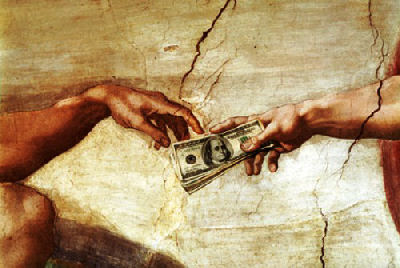
Have you ever noted how the collection is announced? I’ve heard ministers say “It’s time to bring GOD our tithes and offerings”. I do sometimes wonder how they would go about delivering a bag of cash to God after church. But in truth, offerings are for maintenance and operations of the 501(c)(3) organization that claims to represent God but actually represents Babylon. The one that really gets me though is “It’s time to receive an offering for the Church”. The Church is people but once the money is collected, the people are never included in the distribution the way the Church did in Acts 2 and 4. So it’s not really for the Church. If the collection were honest, the minister would say “It’s time to receive an offering FROM the Church” for it’s the Church – the people – who give. It isn’t FOR the Church until it’s given back to the people who are the Church. To illustrate the point, I’ve daydreamed about interrupting an offering to suggest we take what would normally go into the offering plate and instead give it to the brother or sister sitting next to us. At least THAT would be an offering FOR the Church.
About word games ministers play to call for an offering, I was publicly corrected for suggesting the collection is to be shared by the saints. The teacher said “read 1 Corinthians 16:1”. So I read it to him. It says: “Now concerning the collection FOR the saints…” He reacted as if he’d never noticed that it says “FOR” and not “FROM”. You’ll find similar word games played with the word “Church”. It means “people” when there is work to be done. When the offering is taken, it means the 501(c)(3) organization. Believers really should take time to learn where their offerings go – it’s shocking how little goes to help people directly.
For example, the annual report of the church my parents attended boasted of their donation to the Salvation Army in the executive summary sent to all believers. When Dad paid the fee for a copy of the complete report he found buried deep in the detail a single $75 donation. It was a huge church mom and dad attended with a million dollar budget. On learning the truth, they began giving directly to the Salvation Army. Years before my band sang at a few Salvation Army churches in the Puget Sound area and we were impressed by their charitable work with the poor. By the way, if I never said, Dad was the sound man for our concerts and paid for having my CDs pressed to give away.
As for what to do with our offerings? How much weight should we give to Jesus who told the rich man to sell all that he had and give the proceeds to the poor? The first Church did just that. How about us? For the brothers and sisters who are wrestling with the issue of giving, whether to a building fund, missions or a neighbor in need, there are a few questions I like to ask myself to help direct my giving.
Will it burn? (1 Corinthians 3:13-15) Will it rust? Can it be stolen? (Matthew 6:19) Can people eat it, drink it, or wear it? (Matthew 25:34-36) Does it go directly to the Lord’s work or mostly for overhead?
The day of the Lord is fast approaching where the quality of our work will be tested by fire. The saints we help through our generosity will pass through the fire to the other side. Buildings, not so much. Consider Matthew 25:31-46 and the judgment of the nations where Jesus separates sheep from goats based on whether they fed, gave drink, welcomed, clothed, cared for or visited “these brothers of mine”. The good Samaritan is commended for similar care of a neighbor. How many times and ways does the Lord have to tell us to love and help bear our brother’s burden?
Far too often, we have built with perishable materials when the real church is built with people. Paul tells us God has already laid the one and only foundation upon which to build – and that foundation is Jesus Christ. Upon that foundation the apostle Peter says Christ is assembling us, as living stones, into a spiritual temple (1 Peter 2:5). Only the spiritual temple that the Lord has built will withstand His fire!
We need to build with people. We need to invest in people. When this world is done and the fire of the Lord has consumed all our vain works, only people will remain. So in terms of storing up riches in Heaven, we need to invest in what will cross over … people. About that, have you ever noticed that the gospel says nothing about building programs and “worship services” but it has a lot to say about building one another up? Provoking each other unto good works? Burden bearing?
In practical terms, what does investing in people look like? After my first Tithe article was published in 2001, several brothers and sisters wrote to tell me that they’d received permission from the Lord to sow into their own ministries which is a wonderful idea. Invest in God’s call on your life. Invest in your brother or sister’s calling. The Lord once directed me to sow into the ministry He gave me. My band purchased a PA system with our offerings, where through weekend concerts over the course of 4-5 years, we were blessed to play at many churches in the Puget Sound area. The love offerings congregations took up for us were given to the poor or donated to food banks.
The Lord has also led Karen and I to give anonymously to a believer in need where we got to witness their joy from having their burden eased. He used another gift to save a family’s home from foreclosure and to shame the church for ignoring their brother’s hardship. Sometimes all people need is an example to follow. We’ve never crowed about it but once a friend did figure it out. Their only reply was “I didn’t know we could do that” and then they started doing the same! Oh how that made my heart glad! That’s how it’s supposed to work – a seed sown and watered, God makes it grow and it multiplies. A genuine harvest of spiritual fruit for the Lord: love, joy, peace, kindness, goodness, faithfulness, loving each other in action.
Naturally comes the question, what about the church building? Consider Jesus parting word to the Jews when He left their temple for the last time: “Behold, your house is left to you desolate” (Matthew 23:38). Follow Jesus example and leave. Let someone else pay for a man’s temple and religious services. The Sons are FREE! You get right with God in your giving. Stop investing in what will burn. And if everyone should quit giving to pay for man-made temples, let them go to foreclosure. That’s what happened to my childhood church. Owned by the Presbytery in Seattle, membership dwindled to the point they could no longer afford to keep the doors open, the Presbytery closed it down and leased the facility to a Korean congregation who could pay.
As for the pastors? Get a day job like Paul who mended tents and minister out of love for the Lord and His people, for free. Paul did say, after all, “imitate me”. Likewise Jesus said “Freely ye have received (from me), freely give (to others).” What’s so difficult to understand about “FREE”? The important thing is for you to flee Babylon, repent of the lie of the tithe, and start investing in what is real and lasting – in what will survive the Lord’s fire: the children of God.
Above all, pray about your giving, give what you are led to give and relish the joy of giving.
 The Sons are Free